24 Aug 2026
Investigating Player Retention Metrics Tied to Specific Roulette Variants in European Online Gambling Markets

European online gambling markets continue to expand, and researchers track player retention metrics across roulette variants to understand engagement patterns. Data from multiple jurisdictions shows that variant selection influences session duration, repeat visits, and long-term activity levels, while operators adjust offerings based on these figures.
Market Context Across European Jurisdictions
Regulated markets in Malta, Sweden, and the Netherlands provide detailed reporting on game performance, and industry associations compile aggregated statistics that highlight roulette as a consistent driver of player activity. European roulette with a single zero remains the dominant format, yet French roulette variants that incorporate rules such as la partage produce measurable differences in retention indicators according to regulatory filings submitted through 2025 and into August 2026.
Operators in these regions report that players who begin sessions on French-style wheels tend to extend play periods when the house edge reduction activates during even-money bets, and analysts note corresponding increases in return rates within seven-day windows. Retention here refers to the percentage of players who initiate at least one additional session after the first deposit-funded activity, a metric tracked through anonymized account data.
Variant-Specific Retention Indicators
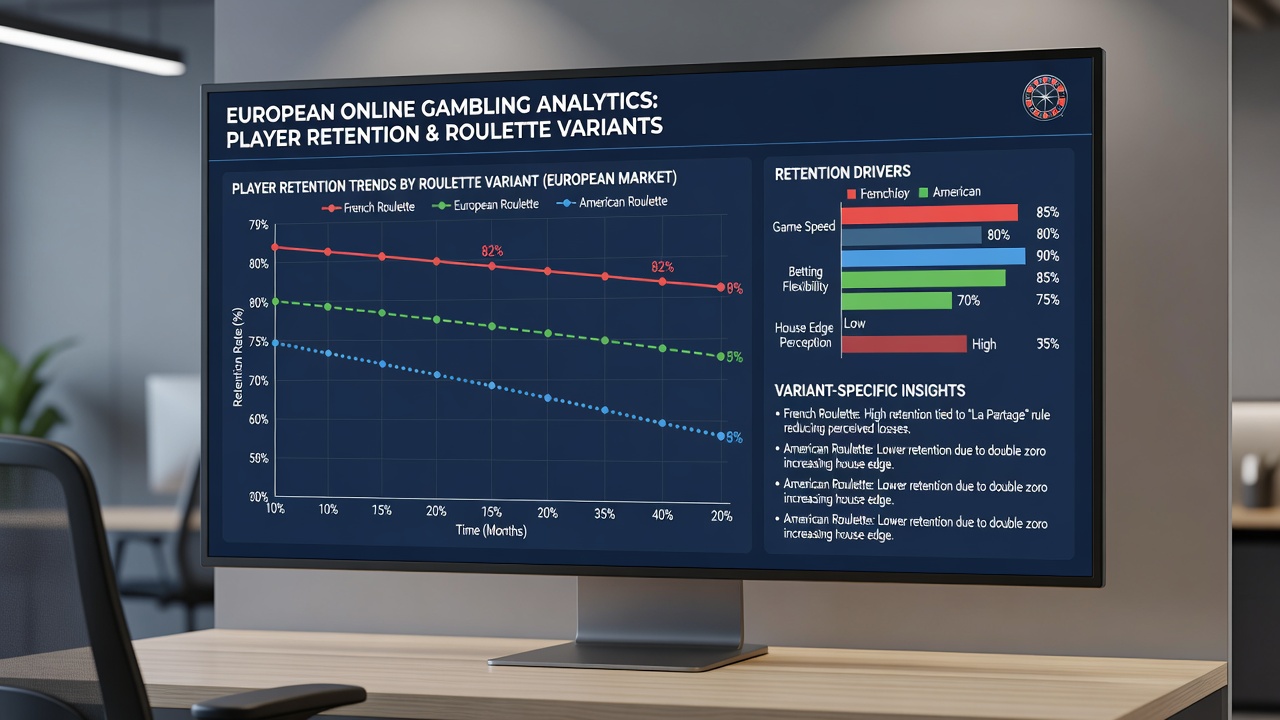
Studies compiled by academic and industry groups separate European, French, and occasionally hybrid online-exclusive formats to isolate variables. One analysis released by a research consortium affiliated with the University of Malta examined over two million sessions and found that French roulette sessions averaged 12 percent longer dwell times compared with standard European wheels, while repeat login rates within 30 days rose by roughly 8 percent for accounts that favored the former variant.
Swedish operators, required to publish detailed game reports under national licensing rules, document similar patterns; accounts engaging primarily with French roulette show elevated 90-day retention figures relative to those limited to European versions. These differences persist even after controlling for deposit size and bonus usage, suggesting the rule set itself contributes to sustained interest.
Factors Driving Observed Differences
Lower house edges in French variants reduce the speed at which bankrolls diminish during even-money bets, and this extended play window correlates with higher cumulative session counts per player. Observers note that mobile interfaces often default to European wheels for quicker loading, yet players who manually select French options demonstrate stronger loyalty signals in longitudinal datasets.
Additional elements include visual presentation, sound design, and live dealer integration; some platforms report that French roulette tables streamed with real croupiers achieve retention rates comparable to or exceeding automated European versions. Data from the European Gaming and Betting Association indicates that live dealer roulette overall supports higher average revenue per user when French rules apply, though individual operator results vary by marketing approach and player demographics.
Regional Variations in Reporting Standards
Germany's updated interstate treaty introduced stricter transparency requirements beginning in 2025, resulting in more granular breakdowns of game-level retention that separate roulette subtypes. Early figures from August 2026 filings suggest French variants maintain a modest edge in player return frequency within the German market as well, aligning with patterns observed in Malta and Sweden.
Canadian provincial data, though outside the primary European focus, occasionally serves as a comparative benchmark in cross-border research papers, confirming that rule variations produce consistent behavioral shifts regardless of regulatory environment. Researchers continue to examine whether autoplay features or quick-spin options moderate these retention advantages.
Conclusion
Retention metrics tied to roulette variants provide operators and regulators with actionable insights into player behavior across European markets. Available data through August 2026 indicates that French roulette configurations frequently correlate with extended sessions and higher repeat engagement compared with standard European wheels, while broader market statistics continue to evolve as new licensing frameworks and reporting standards take effect. Further analyses from academic institutions and trade associations will likely refine these observations as datasets expand.